Josh Stephens: Thank you,
Dr.
Hawley.
Okay,
you heard him.
We get to hear from our esteemed colleague.
Give it up for Dr. Kregg Fehr,
everybody.
Oh, a microphone would be good,
and it has just been bestowed to you.
That's nice.
Dr. Kregg Fehr: Hello.
Josh Stephens: So if you didn't know, Dr.
Fehr is the dean of the J.E. and Eileen Hancock College of Liberal Arts and Social Sciences.
He has a Bachelor of Science degree in geology and paleontology from Midwestern State,
a Master of Science in History from Midwestern State,
and a Ph.D.
in the history of science from Texas Tech University.
So, Dr. Fehr, we're going to do some questions real quick to let us get to know you.
You're a new academic dean.
Dr. Kregg Fehr: Yes.
Josh Stephens: How has your first semester started?
Dr. Kregg Fehr: It's going great.
I've got a great college.
I mean,
the Writing Carnival,
that's my people,
and the humanities,
And wonderful things happening with every department.
And we're really excited about the momentum we're building for the future.
Josh Stephens: That's good.
And I have to say, like, you are probably one of the best-dressed individuals on our campus day in and day out.
Oh, stop.
Where does that sense of style come from?
Dr. Kregg Fehr: Well, I was a college student at Midwestern State when I was working on my paleontology degree.
and there was this older guy who was always dressed up.
And I remember one day I asked him, his name was John Prothrow.
I still remember his name.
I said, why do you dress like this,
John?
It looks so uncomfortable.
And he said, Craig, you look your best, you feel your best, you do your best.
And so I don't always,
you know,
dress like,
I don't know,
like I'm in a barbershop quartet.
But that kind of stuck with me.
And so for when I'm in my profession,
then I want to project a professional look.
Josh Stephens: For sure.
Well, as you could tell by the response earlier to Dr. Hawley's presentation,
we love the
riding carnival here.
Dr. Kregg Fehr: I'm really here just to collect my prizes.
Okay, that's good.
Yeah.
Josh Stephens: You were rather busy, it appeared.
And Dr.
Cary is crying somewhere.
But the Writing Carnival is a huge project,
and it's led by the College of Liberal Arts and Social Sciences.
Why do you all do the Writing Carnival,
and what's the motivation and what's all needed to put that on?
Dr. Kregg Fehr: Well, it was Jana Anderson in English that was the founder of the idea,
and she brought a number of people onto her team.
I mean,
Dr.
Hawley and Dr. Privet and Amy Smith,
And then there's support from Randall and all throughout the LCU community.
But her idea for this was to create a fun academic event.
Truly academic,
but also something fun.
And what she really wanted to do was encourage greater literacy
and also engage everyone's creativity in the writing arts.
And I think one of the great things about it is there are other events that we have
where there's food and people go and they grab the food and they head out.
But what you see is that people are on the campus
and they go and they get their food and then they look.
Maybe they don't necessarily participate in all the competitions,
but they look at them.
And maybe they go watch the movie.
Maybe they listen to some of the readings.
And the hope is that this translates into,
yeah,
you perhaps reading something that you've encountered,
maybe discovering a new genre.
But it's also led to scholarship as well.
And what you may not know,
those of you that are participating in this,
is that it's not just at LCU anymore.
That what happens here has been presented at scholarly conferences,
and other universities are adopting what's happening here on your own campus.
Josh Stephens: That's good to know.
So if you attend a liberal arts university as a student, you're required to take courses in history and literature courses as well.
Some may have a desire to not do those things and just focus on their major.
Tell us why it's important that a liberal arts degree really, why does that matter to a student and to a university?
Dr. Kregg Fehr: I don't believe there's anyone who doesn't love history or literature.
No, but actually,
let's think about this for a minute.
And so your major teaches you a profession.
It teaches you a discipline.
But what the liberal arts teach you is how to think,
how to ask questions,
how to communicate clearly,
how to understand human beings,
and how to put all of your knowledge into context.
In what profession is that not valuable?
In every profession that you have, you're going to be encountering human beings.
You're going to have to weigh evidence.
You're going to have to make decisions based on their context.
Ask Mr.
Mack,
Dean of the College of Business,
how important communicating clearly is to someone who's a finance major.
So the question really is not, the question isn't why should people take history and literature,
history which forces us to confront complexities,
evidence that's missing,
different perspectives,
Literature,
which is complementary to that and encourages you to inhabit imaginatively other lives and other moral dilemmas.
The question isn't why you should take those.
The question is what kind of or why should an accounting major, why should a biochemistry major take those?
It's what kind of an accountant,
what kind of a biochemist do we want to make here at LCU?
Well, I want to make one that's going to be formidable in the workplace and in their profession and in their lives.
So formation includes these.
These are not decorative skills.
These are critical skills.
Josh Stephens: And not only do you come out of that as a better student,
but a more well-rounded individual.
Yeah, more complete person.
Yeah,
for sure.
So this is the final academic question,
okay?
You specifically are known for taking liberal arts and social science students in the curriculum
outside of the classroom through our global campus opportunities.
Why should students participate in these experiential learning opportunities?
Dr. Kregg Fehr: Because it will change you forever.
It's broadening like you can't imagine.
Last year this time, we were planning for the haunted history class trip to New York.
And it's really a class about urban history.
But haunted history sounds a lot more fun than urban history.
And my haunted history people, I know you're out there.
There's about a dozen of them.
And you form cohorts when you go on these trips.
I mean, you want to make friends that are going to be with you forever.
Our athletes know this.
Our people in all the different groups know this already.
Go and live with people for a week, right?
Go and live with people for three weeks.
That's where you're going to make some connections that are going to benefit you forever.
But for history,
and all of us have a history,
and every nation has a history,
there's just something different about standing in the place with the stones underneath you
still ringing with those voices that have influenced the world so much.
And there's tremendous difference between seeing a piece of art up close or looking at one in a book.
And it's that way with everything.
There's just a difference to encountering it firsthand.
And it's broadening as well to experience other cultures.
It does. It broadens you in ways you wouldn't anticipate.
You'll come away from it. You should come away from it.
A person who thinks more charitably about others.
And so it's just, these are incredible.
I mentioned that haunted history class,
and they came away from that so strongly impacted,
liking each other so much that I guarantee you, we're already talking about it.
When they're alums,
they're coming back.
We're going to go to New York again as alums with that group.
So you should really think about this.
Josh Stephens: Yeah, and I can attest, having watched Dr.
Fehr on the E Pluribus trip,
and there's a number of our freshmen who are out there that got to be a part of that,
It was interesting seeing the camaraderie, but also the way you made history come to life.
And the way that you really, it wasn't about just learning.
It was about experiencing.
And I got to do that myself.
I didn't think I was going to get to stay on the trip.
And Kregg said, we're in Philadelphia.
Let's go.
So around midnight,
we're walking around Philadelphia.
And he's pointing out places that matter to us as a country,
that matter to him personally.
It was awesome.
We got yelled at.
It was a lot of fun.
We did get yelled at.
And so I appreciate the things you do.
Now what I'm going to do is some rapid-fire questions.
So we're going to get to know the real Kregg Fehr.
Okay.
Dr. Kregg Fehr: That's scary.
Josh Stephens: We're going to end with these questions, and then I'm going to give you the opportunity to dismiss the students.
Dr. Kregg Fehr: Okay.
Josh Stephens: Dr.
Fehr,
are you a dog or cat person?
Dr. Kregg Fehr: I'm a dog person.
Josh Stephens: Okay.
Dr. Kregg Fehr: A wiener dog person.
Josh Stephens: Okay.
Nice.
Dr. Kregg Fehr: That's right.
Josh Stephens: Dr. Fehr, what's your go-to donut order?
Dr. Kregg Fehr: Oh,
man.
I actually like a chocolate cake glazed.
Josh Stephens: Okay,
good.
Dr. Kregg Fehr: There we are.
Josh Stephens: Dr. Fehr, if you could watch one TV show,
what would that television show be?
Dr. Kregg Fehr: Just one television show.
Oh, that's hard.
I guess The Office.
Josh Stephens: Okay.
All right, good.
Dr. Kregg Fehr: Yeah.
Josh Stephens: Yeah.
Dr. Fehr, what's your favorite genre of music?
Dr. Kregg Fehr: Oh,
my goodness.
Golly, I guess lately I'm really into country again.
It's true.
That's good.
I'm back.
Josh Stephens: And this is my last question, but it is really important because I think a lot of people out here want to know.
If when you meet with Dr. Gallaher and the other academic deans,
if you could thump one of those academic deans on the head,
who would it be and why?
Dr. Kregg Fehr: Well, I feel like I've thumped Dr.
Cary on the head several times today already.
Josh Stephens: Yeah,
he is.
Dr. Kregg Fehr: It's only done out of affection.
Okay.
So who would I thump on the head and why?
Well,
Toby,
because he's so tall, it would force me to jump.
Josh Stephens: Okay,
that's good.
That's good.
Guys, let's give it up for Dr. Kregg Fehr.
Dr.
Fehr, the honors are yours.
Dr. Kregg Fehr: You are dismissed.
Thank you.
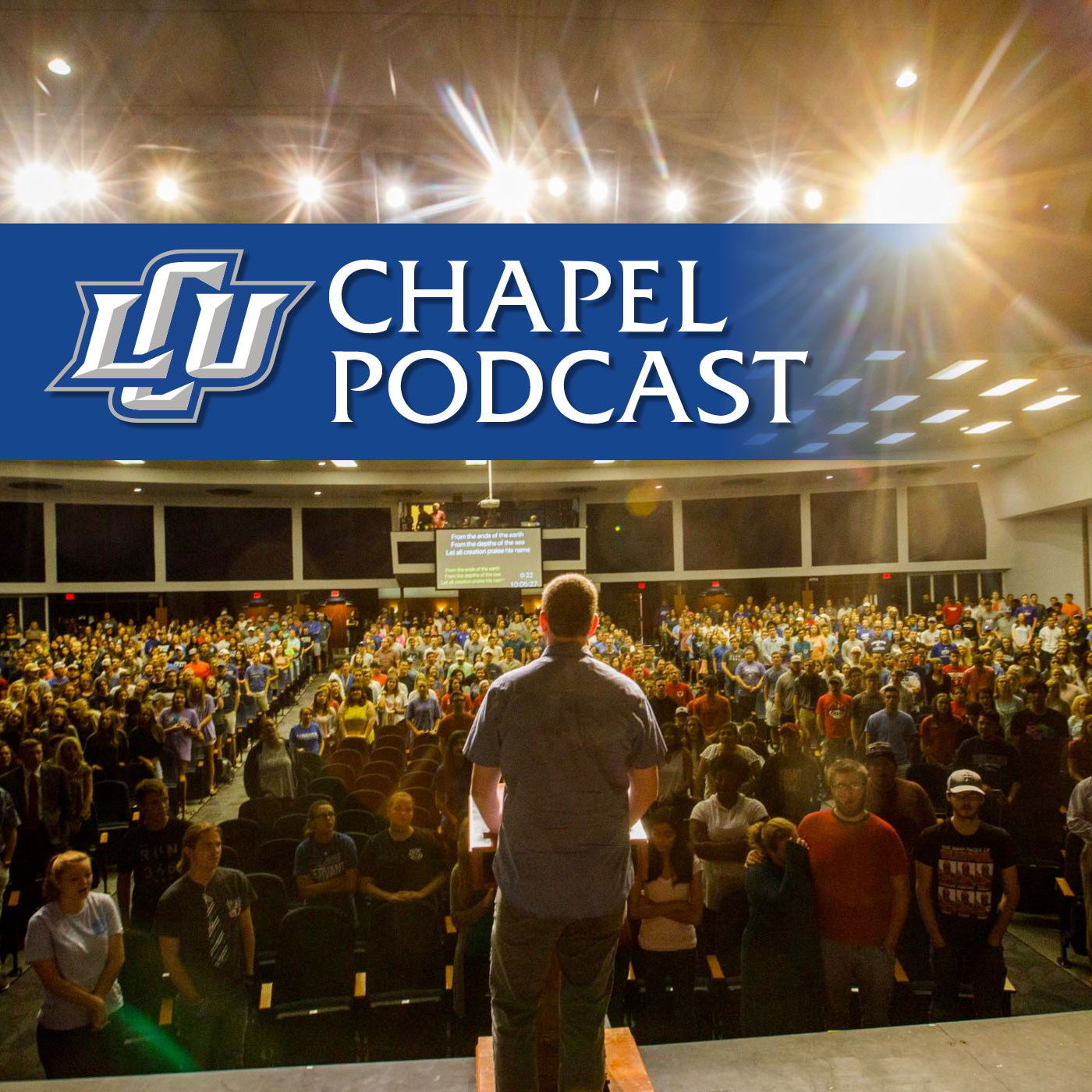
Monday, Tuesday, Thursday, and Friday in the McDonald Moody auditorium, campus family and friends make time for chapel, a time to celebrate relationships. Some chapel times will focus primarily on our relationship with God, while others will focus primarily on community with each other. Many chapel experiences will combine elements of both.
RSSListen on your favorite podcast app




The Value of a Liberal Arts Education
Monday, Sep 28th, 2026Author : Dr. Kregg Fehr
Dr. Fehr shares why the liberal arts matter, how experiential learning can transform students, and the story behind LCU’s Writing Carnival.
Episode length 11:02 minutesDownload
00:00
11:02
Loading