Matthew Duvall: Good morning, everybody. How are y'all today?
It's great to hear from y'all this morning.
Okay, so today we're going to do something kind of special, very special to me.
We're going to continue our celebration of Black History Month,
and I'm going to interview two of my favorite people on campus.
Of course, my name is Matthew.
I'm gonna have y'all just briefly introduce yourselves real quick.
Trinity Cotton: Okay, hey, I'm Trinity. Some of y'all know me. I'm light looking.
I'm president of the Black Student Union and I'm in the chemistry department with a bunch of other nerds.
And so yes, that's what I do. Yeah.
Trevon Joseph: Hi. Hello. Oh, yeah, yeah, okay. My name is Trevon Antoine Joseph.
I am a music education major.
That's about everything about me.
That's pretty much it.
I just sing.
Matthew Duvall: All right, awesome.
We're going to get right into it.
Last week, Dr. Hagee gave an excellent presentation
talking about stories and the stories that form us.
And he challenged us to listen to our neighbor.
So during this Black History Month,
I would like to hear from both of you
what stories from black history are formative for you.
Trinity Cotton: Okay, so I have two stories.
One that I say is like serious, and then another one that's a fun fact,
because I like to have at least a little fun with sad history stuff.
So my great-great-uncle, his name was Leek Daniels,
a mob came and lynched him in the town square in Center, Texas.
It's a small town, practically Louisiana, but somehow still Texas.
They lynched him in the town square for allegedly killing a white woman that they had no evidence that he did.
And the mob wasn't even from center Texas.
They came from a town over.
The governor called and said, hey, like, y'all don't do this.
Let's wait for a trial, whatever.
They still went and did it.
And then about 100 years later, we got this plaque from the, what is it, the Equal Initiative Act?
Equal Justice Initiative Act.
And it's just a plaque to him and all the other folks that they did like that.
He was only 16 at that time, too.
So it's like when I was 16, I was not worried about getting lynched.
I was worried about boys if my outfit looked good.
But, yeah, so that hits pretty hard in my family.
My mom taught me about this when I was old enough to understand
but not quite young enough to where it scared the crap out of me.
But, yeah, that was just something pretty heavy.
And it's just crazy to think that that's my great-great-uncle.
I thought it was, like, four times great.
But it's, like, that was my papa's uncle.
Like, OMG.
But, yes.
And then here's my fun fact.
So those are my great-great-grandparents around the same area.
They had, like, a family of 19.
And only one kid died out of their, what is it, one set of triplets.
and then about four sets of twins.
And these are all natural births back in the day,
no hospital, rural Texas, East Texas.
And so even to this day, I have a lot of family out there.
Anytime I go out there, I'm like,
well, I sure can't date anybody out here
because I know I'm related to them.
So, yes, and that's why I have such a big family,
both out here in West Texas and East Texas.
Trevon Joseph: Drayvon.
Right up there is my great-great-grandpa, Mr. Michael Paloui Francis.
He is a
my family lineage lies, Louisiana, Baton Rouge, Lafayette, places like that.
So he means a lot to me, and he's the reason why a lot of my family members continue in
the path of civil rights unions.
My mom is a part of BLK for LBK, which is a black union for Lubbock Patreons.
And also why half of my family members attended an HBCU.
My grandma was in Delta along with my auntie.
My mom was an AKA and my uncle was a noop right there at Texas Tech University.
And he was a part of their noop chapter, one of their first noop chapters actually.
So that was why this is one of the biggest reasons why black history is taught in my family.
We have so many prolific people that we should and have looked up to,
and this is one for me and will always be one for me.
Matthew Duvall: I'm curious, how early were you introduced to the idea of activism?
Trevon Joseph: Probably since I came out of the womb.
Truly, my mom, she was very big on her history,
and it has to do from where she grew up and where we grew up.
Louisiana at the time that she was growing up was, it was a place, you know.
Growing up, even though there were a lot of sanctions on things about segregation, from when she was a child, there were still a lot of prejudice things happening to her.
And my mom wanted me to be aware of those things, but not to let that stir me away from my brothers and sisters of Christ.
because at the end of the day, we are the same.
We're just not always treated as such at times.
And so understanding and recognizing that
was really important to her
and was important for me to understand
that not everyone is going to see me as equal part.
And so she made that very known from a very young age.
She taught us all about our history.
During Black History Month,
she would literally give us tests.
She would make sure we knew our history.
She didn't play about it.
So, yeah.
Matthew Duvall: And Trey, same question for you.
What are some of the, how are the stories you were told growing up affecting you still?
Trinity Cotton: Okay.
So, with the lynching story, that just hit, like, I don't know.
That's, like, something big to me.
Because, like, you always hear about it or read about it in the textbooks.
But for it to be so personal and, like, come from my direct family line, it's like, OMG.
Like, they were getting us back then.
But with my activism, it makes me want to speak out more because I know, like, for instance, I'm pretty sure none of these people knew this.
Like, some people in the crowd knew, but a lot of people didn't know.
Some other people in my family, like the younger ones, we tell them that, and I just want everybody to be, like, involved in this because it's like this happened not only to millions of other Americans.
It happened to our family specifically.
Like we can go back in the little ancestry timeline and get like the dates, the times and all that.
When I was like, I don't know how old I was when my parents told me about this, but it did make me look at stuff different.
Not like, oh, white people are bad or whatever.
I never thought that.
I just thought like, oh, wow, like stuff could be really bad.
And I'm glad that they're not as bad.
We still have a way to go in some places.
Matthew Duvall: but yeah. I also, I was struck by your family's story. Don't catch me lying here, but
Trinity Cotton: is the man who was lynched was her brother, right? Okay, fun fact. Yes. This is fun fact number three.
Yeah. So both of these stories come from my mom's side of the family.
My uncle who was lynched was on my papa's side. Now this is my grandma's side, and so
they were all living in the same area at the same time and that's what I mean about I can't go over
there and date anybody because somehow some way we're related um and I think this was a couple
years after that like probably 10 to 15 years after that uh so yeah I see such a cool story
Matthew Duvall: of while there was tragedy there was also triumph because they're still in the same town and now
they've got 14 kids and are breaking records quite honestly about it. I thought that was so cool.
Moving on a little bit, I want to know y'all's opinion. When we teach about black history,
sometimes things are left out. So I would like y'all to share, excuse me, what parts of black
history do you think are under-emphasized in some of our history classes? For me personally,
Trevon Joseph: it has to do with a lot of black innovation.
Black innovation to me is really important to understand,
especially in American history,
because we are not just our tragedy,
we are also our triumph.
This is a book passed down through my family,
and it has a lot of information in it about slavery,
Jim Crow, all of these different things
that have happened throughout our history,
and also black innovation.
And when talking about that, we think about, you know, we want to think about these inventors, these great minds and not just people of tragedy.
Like Garrett Morgan, the man that made the three light signal.
Mary Vaughan Britton, who made the home security system in 1966.
Alexander Miles, the automatic elevator door.
The blood plasma bank was created by Dr. Charles Drew.
Even our natural gas heating and cooling system, Alice Parker, you know, and these amazingly, like these beautifully amazing literary majors that we had.
Tony Morrison, beloved Maya Angelou.
I know why the caged birds sing.
There's so many amazing and prolific African-American people today and in our past that we should also be talking about.
Our history is not just our tragedy.
So understanding that we are more than just that is
really important to me because my mom is a
literary specialist.
You know, my grandma, she has a doctorate.
You know, there's so many amazing things that come
out of black history and it's not just our tragedy.
Matthew Duvall: I'd also like you to talk a little bit more -- your
family sees education as very important and even
college education.
So if you want to go into that a little bit more.
Trevon Joseph: With my family, we did not, we, they grew up in a very, I wouldn't say a very poor, poor place,
but a place where they didn't have as many opportunities.
So they were trying to find those opportunities anywhere that they could.
And my grandma instilled in them, mostly my great grandma, Joyce Francis, instilled in them,
Your education is how far you're going to go,
at least at this point, where we are in history right now,
or where they were.
You know what I mean?
Education was important, not just for them to be educated
about what was happening,
but how people viewed them at the time.
So I'm very thankful to have the black scholars
that I have in my family and my family,
because they not only are going to teach me
about my history, but how important education is as a whole.
Matthew Duvall: All right. Excuse me again. Trini, same question for you. What do you think is
under-emphasized when we teach about black history? For me, it would have to be the timeline
Trinity Cotton: of things. So I have some aunts and uncles and a little bit of my parents' lives. They
had segregated schools, segregated bathrooms, water fountains. They had to go, they couldn't
go in through the entrance. My aunt always tells me this story. It's not funny, but it's funny to
me she's like we couldn't even go in and get a burger and I'm like well I would like a burger
too but um I think about that a lot and obviously if she's still talking about it it still you know
affected her um she's only like 60 she's in her 60s and still up still functioning and I just
think about them and about like around my age how they didn't have the same privileges that I do now
Like I can get up here and talk.
I can go to school and not have to worry about stuff.
I can, me and my friends can go hang out, go to the park,
not worry about having to be somewhere when the lights are out.
And so I just think the whole timeline of it all should be more emphasized.
Like there are some people still living who are still dealing with getting called stuff
when they're just trying to go to work or make a living.
And they just got bullied and prosecuted for the color of their skin.
Trevon Joseph: Yes, like with the first black woman to ever enter a desegregated school, she's only 71 years of age.
This was not that long ago.
And understanding that is really important.
You know, these people, a lot of these people are still alive.
The man that worked extremely close with Dr. Martin Luther King Jr. just passed away only a week ago.
You know, and he passed at 83.
So understanding that this was not as long ago as it may seem, you know, is also important.
Like a lot of these people are still here today and their stories can't still be told.
You just have to go out and find them.
Matthew Duvall: I would also like to hear from both of you because we are at a Christian university.
How has faith and joy impacted your family and your family's stories?
Trinity Cotton: So with me, me and my family, we're like very religious.
Not like religious as in the law way, but religious as in we know the Lord.
Like we're besties.
And so with all this tragedy and all that, we try to find like, okay, the Lord is using us.
So that happened so I could get here and share his story.
And maybe that's going to impact somebody's life now.
Or maybe somebody will tell their kids in the audience or something.
It's going to impact somebody, and it's going to go somewhere.
So I just think all suffering, it's worth, like, it's for Christ.
Like, all suffering is to live.
Wait, what is it?
To live is Christ.
To die is gain.
So I just think whatever we go through in this life, whether it's related to racism or just some other ugly stuff, God is using it either to show that person their own character
or to show you that you're going to have to speak up about something even though you don't want to.
And so, yeah, that's what we think about that.
Matthew Duvall: Same question, Trey.
Trevon Joseph: For me, I've been a part of a church my entire life.
I'm Pentecostal Baptist, also known as Pentebaptist.
And, you know, I don't know if y'all know anything about Pentebaptist churches,
but we don't play about our, you know, we don't play about our praise.
So, you know, just having that influence in my life brings about so much joy, you know what I mean, and the joy of what God can bring.
So when we're talking about our past, we also need to talk about our future and the fact that God has brought us through that.
It is because of God that we had these prolific, amazing black scholars that continue to teach and continue to preach their love and their joy and continue to just be there for one another, for our brothers and sisters in Christ.
Not just skin tone wise, but also, you know, you are not just, you know, a white man.
You are my brother in Christ.
You know what I mean?
And the same goes this way, you know.
So I will continue and continue to preach that.
We are brothers and sisters.
in Christ first before anything else.
Matthew Duvall: And understanding that is really important.
Well, awesome.
Well, amen.
Well, if you want to hear a continued portion
of this conversation, tonight at 8 p.m. in the sub,
we're going to be showing Just Mercy.
Ladies, that is Michael B. Jordan.
So, you know.
But anyways, we're going to wrap it up here.
Thank you all so much.
Y'all are dismissed.
Thank you.
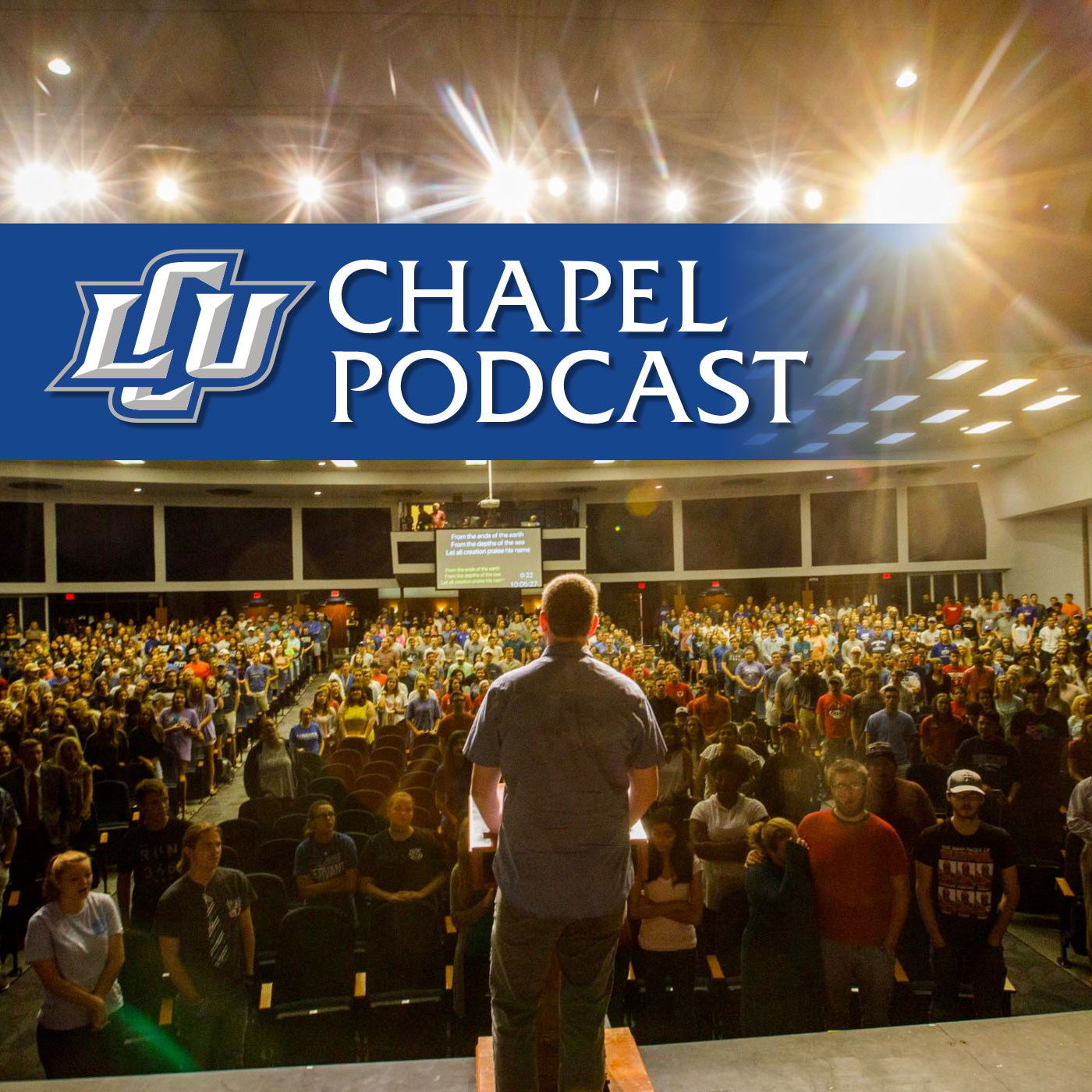
Monday, Tuesday, Thursday, and Friday in the McDonald Moody auditorium, campus family and friends make time for chapel, a time to celebrate relationships. Some chapel times will focus primarily on our relationship with God, while others will focus primarily on community with each other. Many chapel experiences will combine elements of both.
RSSListen on your favorite podcast app




Stories That Form Us: Black History, Faith, and Family
Tuesday, Feb 24th, 2026Author : Trinity Cotton and Trevon Joseph
In this Black History Month conversation, students share deeply personal family stories, reflections on activism, and the role of faith in shaping identity, resilience, and hope.
Episode length 17:04 minutesDownload
00:00
17:04
Loading